 BackBack
 About Us


Alliance of Energy Intensive Industries
Non-Energy Extractive Industries Panel
REACH consortium "flue dust from cement clinker production"
Sustainable Process Industry through Resource and Energy Efficiency

ZVC SR - (Association of Slovak Cement Producers )
Hungarian Cement Concrete & Lime Association
Heidelberg Materials Kunda AS-i
Heidelberg Materials Cement Sverige
Heidelberg Materials Sement Norge
France Ciment / Organisation professionnelle de l'industrie cimentière française
MPA – Minerals Products Association - Cement
VÖZ – Vereinigung der Österreichischen Zementindustrie / Association of the Austrian Cement Industry
BACI - Bulgarian Association of Cement Industry
Svaz výrobcu cementu CR / Czech Cement Association
VDZ– Verein Deutscher Zementwerke e.V.
PCA – Stowarzyszenie Producentów Cementu / The Polish Cement Association
ATIC – Associação Técnica da Indústria de Cimento / Technical Association of the Cement Industry
Cementa Industrija Srbije / Serbian Cement Industry Association
Oficemen – Agrupación de Fabricantes de Cemento de España / Association of Spanish Cement Producers
UKRCEMENT - Association of Cement Producers of Ukraine
Hellenic Cement Industry Association
Febelcem – Fédération de l’Industrie Cimentière Belge / Association of the Belgian Cement Industry
Policy Focus


Innovation Projects
Resources


Events


What, Why & Where
Cement is the glue of concrete when it binds fine sand and coarse aggregates together. Cement act as a hydraulic binder, i.e., it hardens when water is added.
Whilst everyone knows the word cement, it is often confused with concrete or mortar. Cement is a key ingredient in both concrete and mortar and it is always mixed with other materials before use:
Cement and concrete have been used to build durable structures for quite some time. Thanks to the special binding properties of cement, concrete is a very resilient, durable material that can bear heavy loads and resist environmental extremes.
Product Standards
The following are the two main standards which apply to cement and concrete:
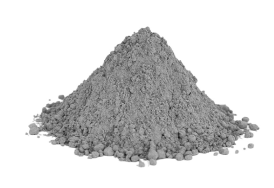
European cement standard EN 197-1 Cement – Part 1: “Composition, specifications and conformity criteria for common cements” which defines 27 distinct common cement products and their constituents. These 27 products are grouped into the following categories:
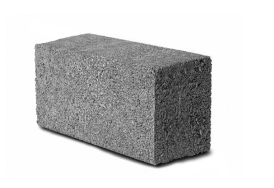
European concrete standard EN 206-1 Concrete – Part 1: “Specification, performance, production and conformity” applies to concrete for structures cast in situ, precast structures, and precast structural products for buildings and civil engineering construction.
National Standardisation Bodies
(including purchasing of standards)
Distribution Channels
The principal use of cement is to make concrete, with two main types: Ready-Mix Concrete or Prefabricated Concrete.
Ready-mix concrete is produced at a ready-mix batch plant and distributed by truck-mixer to construction sites.
Prefabricated (precast) concrete is the second major type of concrete products and these are cast in reusable moulds. The precast concrete is then cured in a controlled environment and transported to the construction site where it can immediately be lifted into place. This production in standardised conditions requiring only assemblage of prefabricated elements on the jobsite enables application in less favourable weather conditions. Hence, use of precast concrete strongly varies regionally.
Descriptions of the production process, photos and pictures can be found on websites of our members as well as European and national Ready-Mix and Precast Associations. The remaining 25% of cement is consumed by:
Lastly, some niche uses include cements used in (oil) drilling for borehole stabilisation, and cements for immobilisation of back fillings on refuse tip embankments.


©2026 Cement Europe. All rights reserved